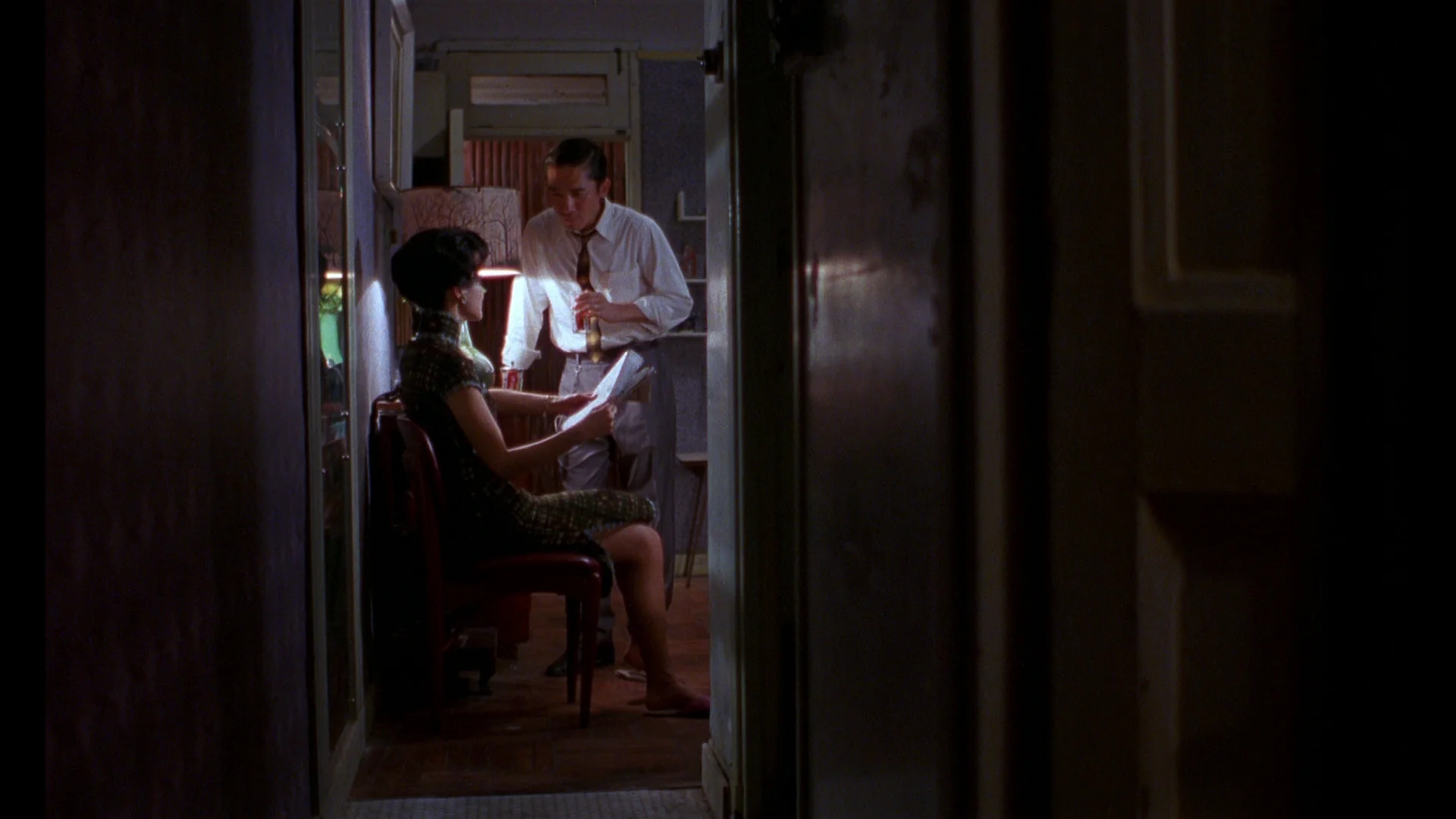
Some love stories are remembered for what their characters say. In the Mood for Love is remembered for what remains unspoken. Wong Kar-wai’s 2000 film follows two neighbors who gradually discover that their spouses are having an affair with each other. Instead of turning their discovery into melodrama, the film finds emotion in silence, distance, and fleeting moments.
Christopher Doyle and Ping Bin Lee’s cinematography makes every encounter feel carefully observed. Narrow hallways, doorways, mirrors, and crowded interiors repeatedly place physical barriers between the characters, reflecting the emotional boundaries they refuse to cross. Rich reds, greens, and deep shadows give the film a dreamlike quality, while slow motion stretches ordinary moments into something talmost timeless.
What makes the film remarkable is how its visuals communicate feelings the characters cannot express. A glance can become a confession; passing each other in a hallway can feel more intimate than a conversation.
For another film that turns looking into a language of its own, explore our gallery on Portrait of a Lady on Fire.